Paris doesn’t sleep-it just changes its rhythm
Most tourists think of Paris as cafés, croissants, and the Eiffel Tower. But after dark, the city becomes something else entirely. The streets hum with basslines. Dimly lit basements echo with trumpet solos. Underground warehouses pulse with electronic beats. This isn’t the Paris of postcards. This is the Paris that lives in the music.
Where jazz still breathes like it did in the 1950s
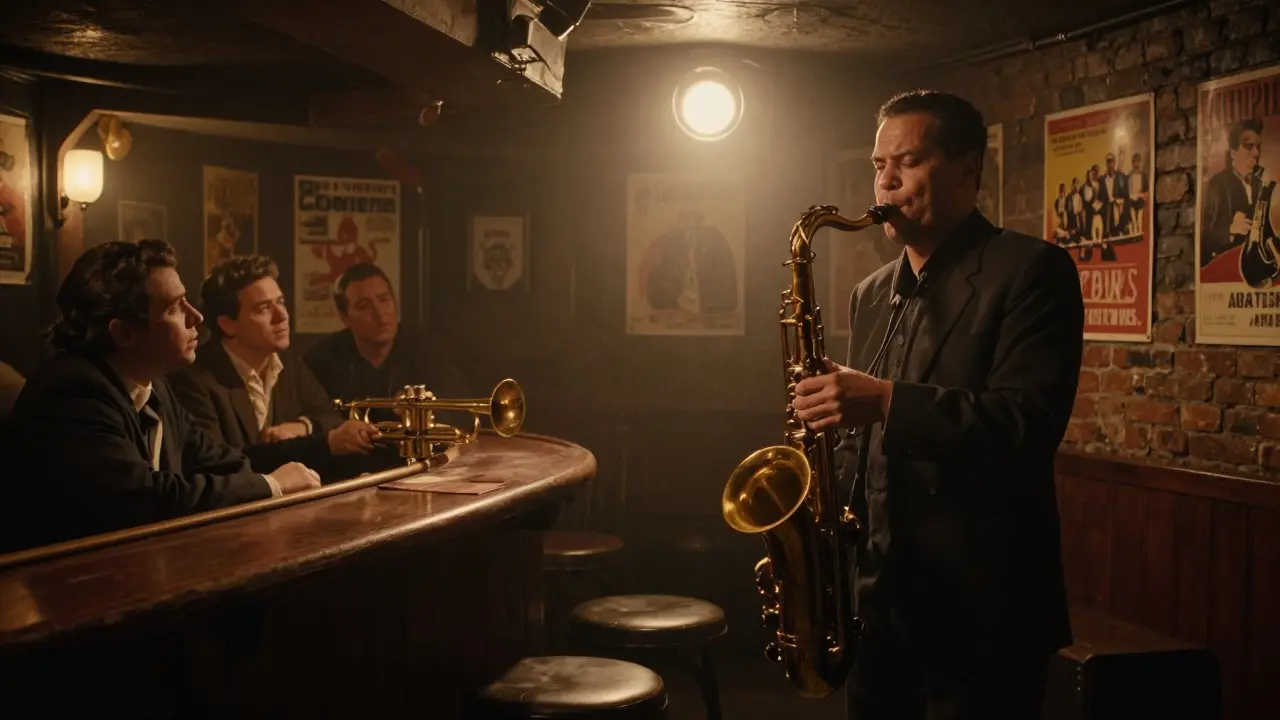
If you want real jazz, skip the tourist traps. Head to Le Caveau de la Huchette in the 5th arrondissement. This place has been running since 1934. No fancy decor. No menus with prices in euros and dollars. Just a small room, a wooden bar, and a band that plays swing, bebop, and hard bop like it’s 1952. Musicians here don’t play for applause-they play because they can’t stop. You’ll hear the same standards-Autumn Leaves, St. Thomas-but every night, they’re different. One night, the saxophonist might stretch a solo for ten minutes. Another, the drummer drops a polyrhythm that makes the whole room lean forward. It’s raw. It’s alive. And it’s cheaper than a latte at Starbucks.
Don’t miss Sunset Sunside in the 18th. It’s run by jazz lovers, not marketers. They book young French talent alongside legends from New Orleans and Havana. The sound system isn’t state-of-the-art, but the acoustics? Perfect. You’ll hear every breath of the trumpet, every brush of the snare. No cover charge on weekdays. On weekends, it’s €10-less than a movie ticket.
Electro isn’t just a genre here-it’s a movement
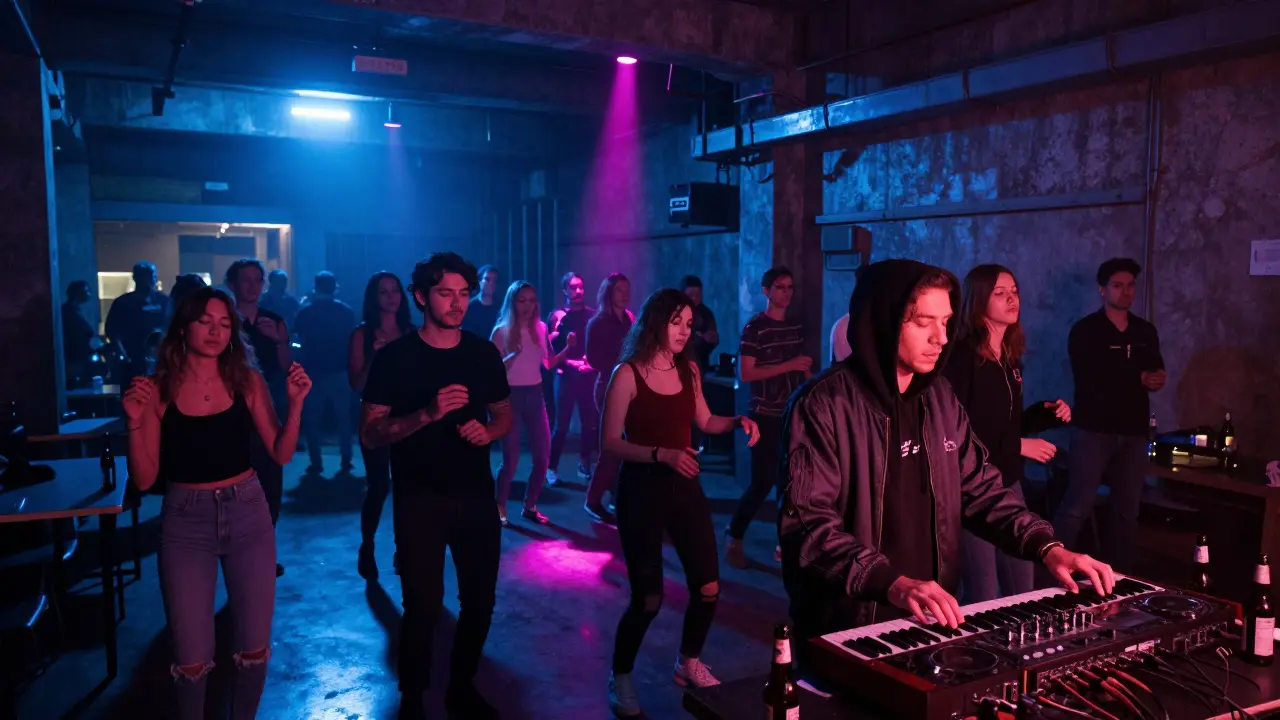
Paris has been a birthplace of electronic music since the early 90s. But today’s scene is quieter, weirder, and more intense than ever. Start at La Machine du Moulin Rouge on Rue des Martyrs. It’s not the Moulin Rouge you think of. This is a converted 19th-century factory. The walls are concrete. The floor is sticky with spilled beer. The DJ? Probably someone who started in a bedroom with a laptop and a free VST plugin. They don’t play Top 40. They play glitchy techno, minimal house, and French electro with vocals in broken English. People don’t dance here to show off. They dance because the beat gets inside you.
For something more underground, find La Java in the 18th. It’s been around since 1977. The playlist shifts every night-sometimes it’s electroclash, sometimes it’s industrial, sometimes it’s a live set from a Parisian synthwave band you’ve never heard of. The crowd? Artists, students, immigrants, retirees. Everyone’s equal under the strobe lights. You won’t find a bouncer checking IDs. You’ll find someone handing you a free shot of absinthe because you smiled at the DJ.
The in-between spaces: where genres blur
Paris doesn’t care about labels. Some of the best nights happen in places that refuse to be categorized. Le Trianon in the 17th hosts everything from Afrobeat nights to synth-pop duos. One Thursday, you might catch a Moroccan gnawa musician mixing trance rhythms with a Roland TR-808. The next, a French indie band with a cello and a vocoder.
Then there’s La Bellevilloise in the 20th. It’s not just a venue-it’s a community. The basement hosts spoken word nights. The courtyard has outdoor jazz sets in summer. The rooftop bar? They play ambient techno while you sip wine and watch the city lights. You’ll hear a jazz trio one hour, then a DJ spinning Detroit techno the next. No genre is sacred here. Everything gets remixed.
When to go, and how to avoid the traps
Paris nightlife isn’t just about where you go-it’s about when. Weekends are packed. If you want space, go midweek. Jazz clubs are quieter on Tuesdays. Electro venues are more experimental on Wednesdays. Many places open at 10 p.m. and don’t hit their stride until midnight.
Avoid the “Parisian nightlife” tours. They take you to overpriced clubs with cover charges of €30 and DJs playing remixes of Ed Sheeran. You’ll pay €12 for a beer that costs €4 elsewhere. Instead, walk. Wander. Ask the barkeep at a quiet wine bar, “Where’s the real music tonight?” They’ll point you to a hidden staircase, a back room, a door with no sign.
Don’t carry cash only. Many places now take contactless payments. But always have a few euros for the cover, the tip, or the stranger who buys you a drink because you asked about the band.
What to expect, and what to leave behind
Parisian clubs don’t have dress codes. But they have standards. No flip-flops. No baseball caps. No loud group chatter. You’re not here to be seen. You’re here to feel. People dress simply-black jeans, a leather jacket, sneakers. The music doesn’t care if you’re wearing designer labels. It only cares if you’re listening.
Don’t expect English everywhere. Most DJs won’t speak to you. Most bartenders won’t ask your name. But if you nod along to the beat, if you dance like no one’s watching, you’ll be welcomed. You’ll be one of them.
How to make it last
Paris doesn’t end at 2 a.m. Some places stay open until 5. Others don’t even open until 1 a.m. Le Baron on Rue des Martyrs is one of them. It’s a speakeasy-style bar hidden behind a fridge door. You need a password. You get it from a friend, or you ask the bouncer. Inside, it’s velvet couches, dim lighting, and a DJ spinning French house with live saxophone. It’s not cheap-€15 for a cocktail-but it’s worth it if you want to end the night like a local.
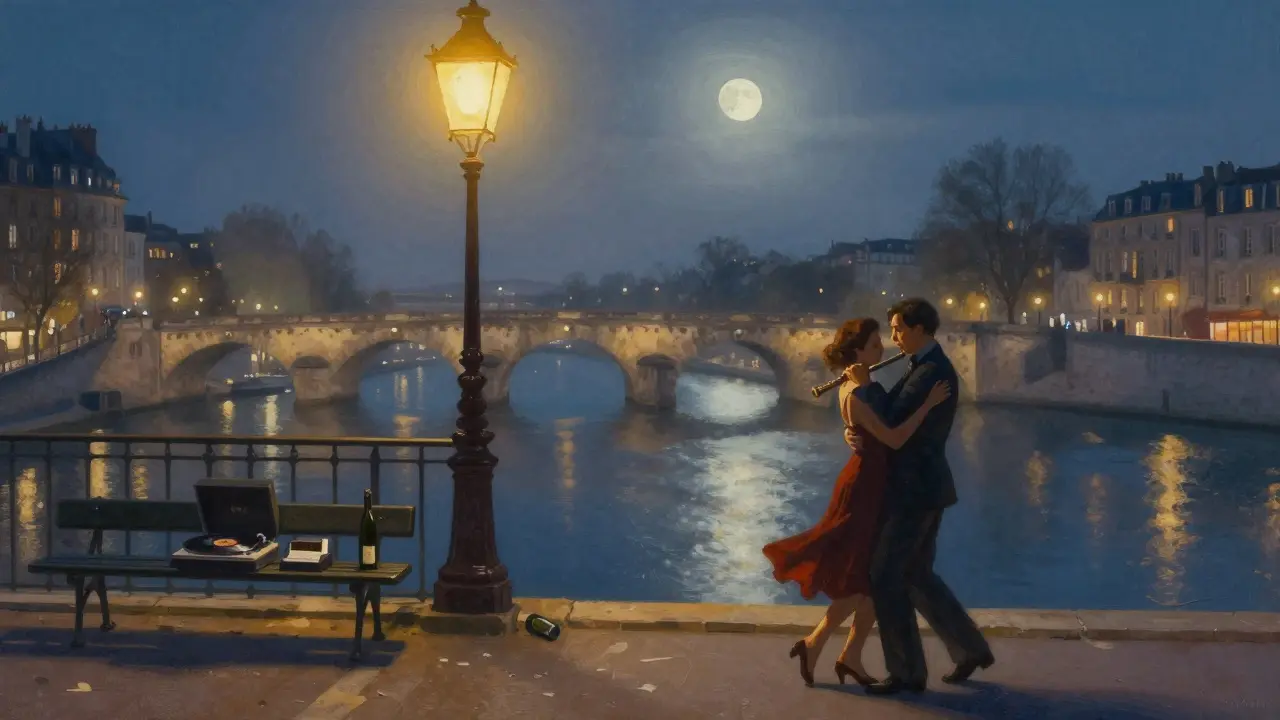
Or skip the clubs entirely. Walk to the Seine after midnight. Sit on the bridge near Pont Neuf. You’ll hear a busker playing a jazz flute. A couple dancing slowly. A man with a vinyl player spinning a 1972 French electro record. No one’s filming. No one’s posting. Just sound. Just movement. Just the city breathing.
Why this matters
Paris isn’t just a city with nightlife. It’s a city that thinks in rhythm. Its history is written in music-from the cabarets of Montmartre to the warehouse raves of the banlieues. To experience it, you don’t need to know the names of every artist. You just need to show up. Listen. Move. Let the music change you.
What’s the best time of year to experience Paris nightlife?
Spring and fall are ideal. Summer is crowded with tourists, and winter can be too cold for outdoor venues. But from April to June and September to November, the weather is mild, clubs are full but not overwhelmed, and outdoor jazz sets return to parks like Parc des Buttes-Chaumont. Many venues also host special events during Paris Jazz Festival in June and Nuits de la Musique in June.
Can I find English-speaking DJs in Paris?
Rarely. Most DJs in Paris are French or from Francophone Africa, the Caribbean, or the Maghreb. They speak French, Arabic, or Creole. But you don’t need to understand their words-you need to feel their beats. The music tells the story. A few venues like Le Trianon occasionally host international acts, but the soul of Paris nightlife lives in local sounds.
Is Paris nightlife safe for solo travelers?
Yes, if you stay aware. Stick to well-known neighborhoods like Le Marais, Montmartre, and Belleville. Avoid isolated streets after 2 a.m. Most clubs have security, and locals look out for newcomers. Never leave your drink unattended. But don’t be afraid to talk to people. Many Parisians will invite you to sit with them, share a bottle of wine, or point you to the next spot. The city’s nightlife is built on connection, not isolation.
Do I need to book tickets in advance?
For big names like at Le Trianon or La Cigale, yes. For most jazz clubs and underground spots, no. Walk in. Pay at the door. Some places don’t even have websites. If you’re going on a weekend or during a festival, check Facebook events or Instagram pages. Many venues post last-minute sets. The best shows are often the ones you didn’t plan for.
What’s the average cost of a night out in Paris?
You can have a full night for €20-€40. Cover charges range from free to €15. A beer costs €5-€8. A cocktail is €12-€18. If you skip the fancy bars and stick to local joints, you can stretch your budget. Many jazz clubs offer €10 entry with unlimited drinks until midnight. Food stalls outside venues sell €3 crêpes. A night out doesn’t have to break the bank.